Bob Weir on developing his guitar style
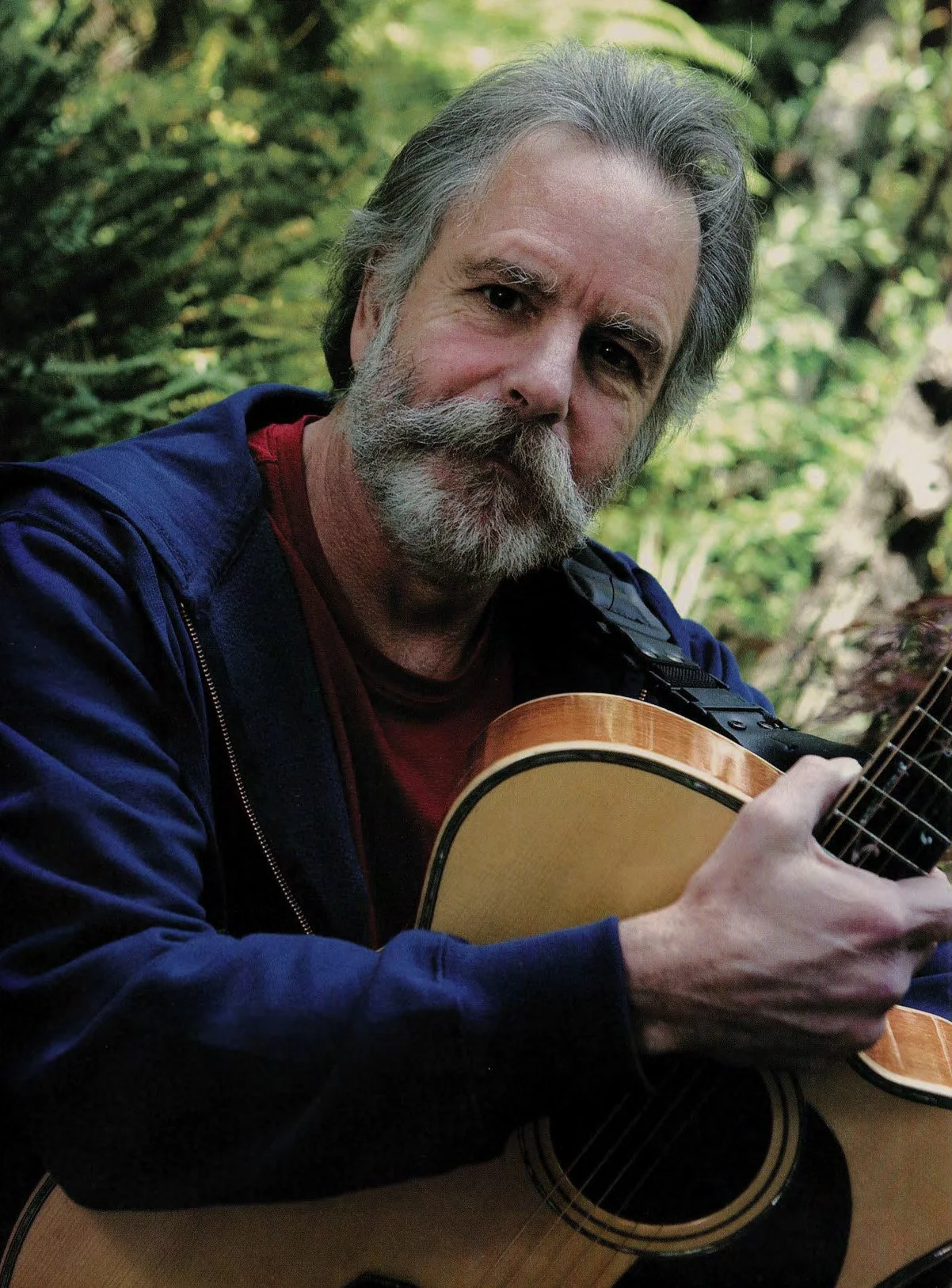
Photo by Anne Hamersky
I’m processing the news about the passing of Bob Weir, which came as such a shock. At 78, as strong and fit as a senior hippie rocker could be, he seemed to have a lot of road ahead still.
There’s no question that Garcia was at the prow of the Grateful Dead ship, but Weir was vital to the band’s sound and direction. He was truly a singular guitarist. Unlike all the players who chug along with their set parts, Weir was obsessed with not duplicating what others in the band were doing; he was always listening and playing as a complement and counterpoint, in conversation with Garcia’s guitar and the other instruments. That was a huge inspiration to me growing up, and also quite mysterious—Weir’s style was (and still is) completely off the chart of conventional guitar technique.
His songwriting, too, was often packed with surprising chord changes and tricky meters. He was always an explorer.
I was privileged to learn more about all this when I interviewed Weir in 2008 for Acoustic Guitar. He was on tour with RatDog, and we met at a hotel in Pennsylvania, where he cradled an Alvarez-Yairi guitar originally built for Garcia and spent a few hours talking about and demonstrating his approach to the instrument. He was so thoughtful and generous, with a sort of courtly manner that was such a contrast to the childlike energy I felt from meeting Jerry.
Above is one of the photos that Anne Hamersky took for the article. Read an excerpt below and find a link to the full interview.
After the tour he made some additional video demos for my story, and we exchanged a couple of emails. Fast-forward to 2019, and I was at Club Passim in Cambridge, Massachusetts, getting ready to host and play a Garcia birthday celebration—part of a series of concerts that were the seed of what became Dead to the Core.
For some reason, I wondered what Bob would have to say on this occasion, and on a lark I emailed him to ask, not really expecting a reply. But in the middle of the show my phone buzzed in my pocket, and when I was offstage I found this text from him:
Jerry will live forever…
So, too, will the sound and spirit of Bob himself, who inspired and sometimes confounded us for so many years.
Faring thee well now
Let your life proceed by its own design
Nothing to tell now
Let the words be yours
I’m done with mine
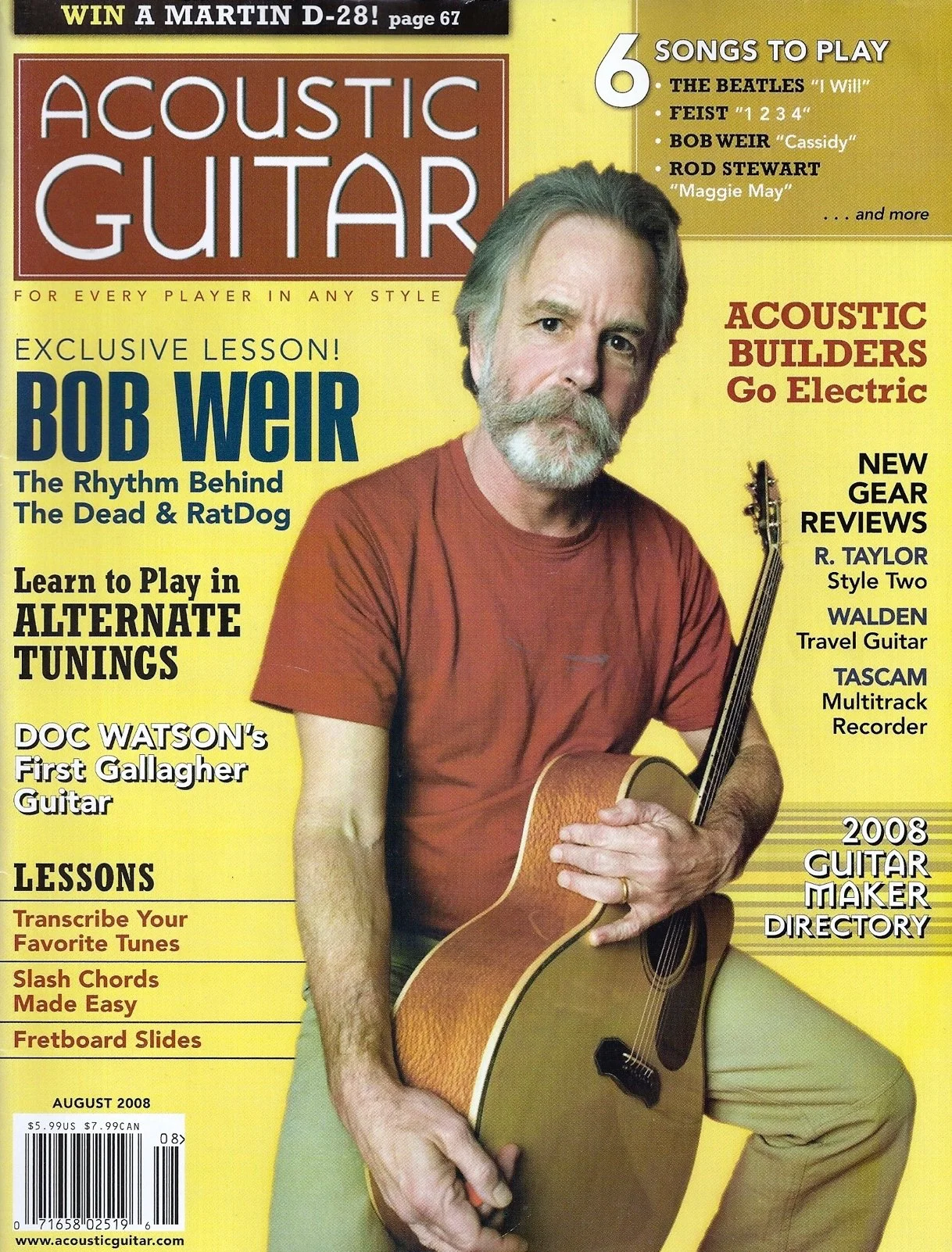
From a 2008 interview for Acoustic Guitar
How is your playing today shaped by your early days in the California folk scene?
When I was first playing, I was doing Kingston Trio stuff, strumming without a pick. And then I heard Joan Baez, so I started to fingerpick. It took me hours and hours of just sitting and working it like a mantra, but I developed some facility so that I could play relatively freely in various keys. Then I heard Reverend Gary Davis; he played fingerstyle, but he was a lot freer on the fretboard, and he abandoned the open strings when he went up the neck.
That was where I was, playing with my fingers, when I met Jerry and we started a jug band that turned into a rock ’n’ roll band. It became apparent to me that I wasn’t going to be playing with my fingers for the rest of my life. And to facilitate bringing my fingerstyle into my new life as an electric guitarist, I learned to play with a pick, using the other fingers that I have left to play fingerstyle.
Parenthetically, a good friend of mine, Taj Mahal, has some theories about the mystical involvement between the fingers and the plucked instrument, where the skin and your nails necessarily have to touch the string to complete the circuit. And I buy it.
Did you have to unlearn your acoustic style in order to find your voice as an electric guitarist?
I didn’t have to unlearn so much as relearn. On the electric guitar you don’t have the luxury of open strings so much. If you do use them, you have to use a really light hand or they’re just going to obliterate the rest of what you’re trying to do. I struggled back and forth between using open strings on electric guitar and just trying to leave them behind.
Open strings hamstring you a little bit, because you can’t go into any of the sharp or flat keys—which is where horns live, for instance. We’ve got a horn player in our band [Kenny Brooks]. He’s gotten awful good at playing in E, A, and D, but it’s nice to give him a break and go into Bb or whatever—he has a great time in the key of F.
Every now and then I use a capo, even on the electric guitar. But usually it’s just too much hassle, and I also don’t like to be pinned down. In the style of music we play, sometimes we drift from key to key when we’re jamming. The guitar is marvelously well laid out. If you can play without open strings, you should do it. You should be good at it.