My back pages
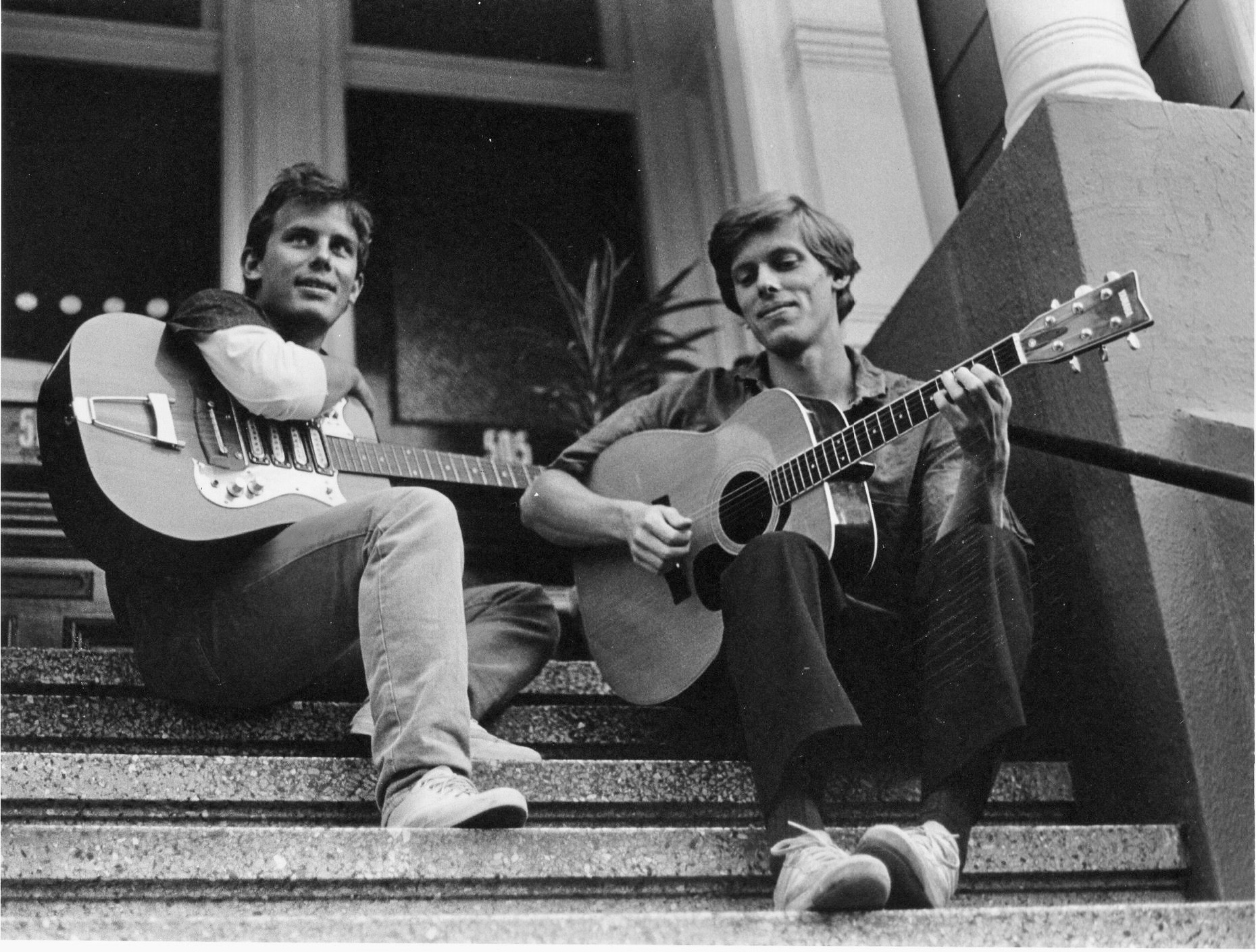
With my brother, Andy, on the steps of my first San Francisco apartment, 1986. Photo by Lisa Bostwick. I'm holding my first real guitar, a Yamaha FG-340, stolen from another SF apartment a few years later.
In the summer of 1986, fresh out of college, I packed up my parents’ old Volvo and hit Rt. 80 west from New Jersey. I’d fallen in love with northern California during a family visit years before, and San Francisco seemed an idyllic place to launch the life I envisioned as a writer and musician.
I was adamant about not getting a full-time job, and about just doing the work rather than going for any kind of graduate degree—and I was unreasonably confident in my ability to make ends meet as a freelancer.
After all, I already had my first professional clip, a book review for the San Francisco Chronicle that paid $50, and I felt sure other assignments would follow. On the music side, I had just finished my most ambitious project ever, writing all the songs for a college musical, and my brother—who moved to San Francisco earlier that year—and I were primed to put our growing body of original music out there.
I had my eye on an (unpaid) editorial internship at San Francisco Focus magazine, and I’d connected with a couple of friends to share an apartment in the city. Beyond that, I had no idea how things would work out.
And yet they did. I found more writing assignments on sundry topics, and also good work as a freelance editor at various magazines, from MacUser to Mix to California Farmer (I quickly learned how to edit articles I did not really understand).
Eventually my parallel worlds of music and writing began to connect, as I did my first musician interviews—with the duo Tuck and Patti, and with Grisman himself.
My timing was lucky, arriving in San Francisco in a lull before the dot-com boom when the city was actually affordable. My brother and I played around with our band, Heavy Wood—our best gigs were at the (then) tiny but legendary club Sweetwater in Mill Valley, where we once nervously played with David Grisman in the house (his son Monroe was also on the bill).
Eventually my parallel worlds of music and writing began to connect, as I did my first musician interviews—with the duo Tuck and Patti, and with Grisman himself. And then in 1989 came the big bang moment for me: I met David Lusterman, publisher of the violin magazine Strings, who was gearing up to start a magazine for acoustic guitarists and looking for a guitarist editor.
Guitarist editor?
Though I was just in my mid 20s and had a pretty thin résumé, I was buzzing with ideas and passion for the subject and got the gig—and became a one-person editorial department creating Acoustic Guitar magazine from the ground up.
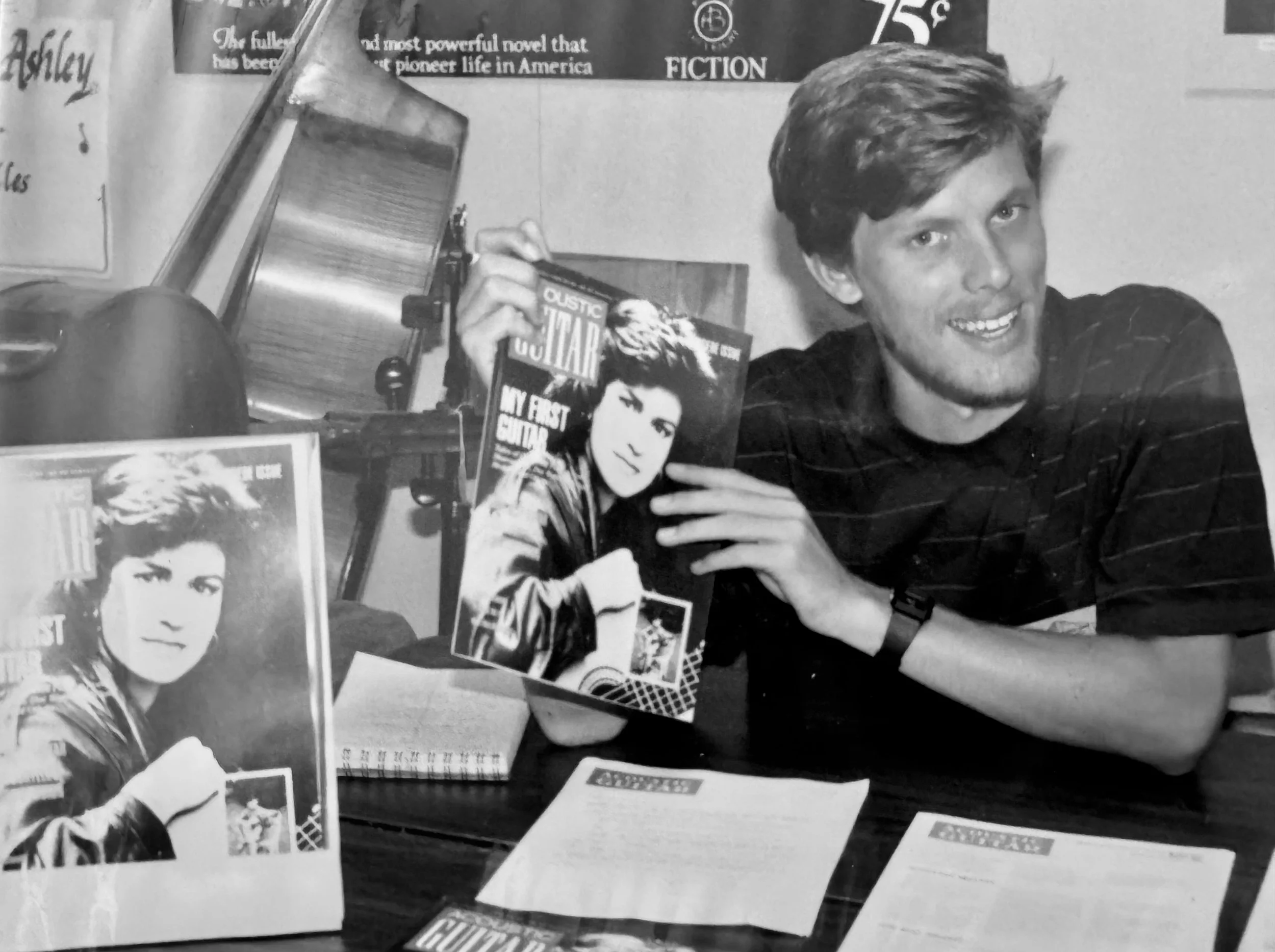
Sharing the premiere issue of Acoustic Guitar magazine at the Guild of American Luthiers convention in Tacoma, Washington, summer 1990.
~ ~ ~
Forty years after my arrival in San Francisco, sitting in my house in Central New York on a balmy summer afternoon, I’m thinking back on all this with some amazement.
I mean, how can it be that I’ve made a living, and a life, around writing and music for 40 years, when in my mind I’m barely past my 40s?
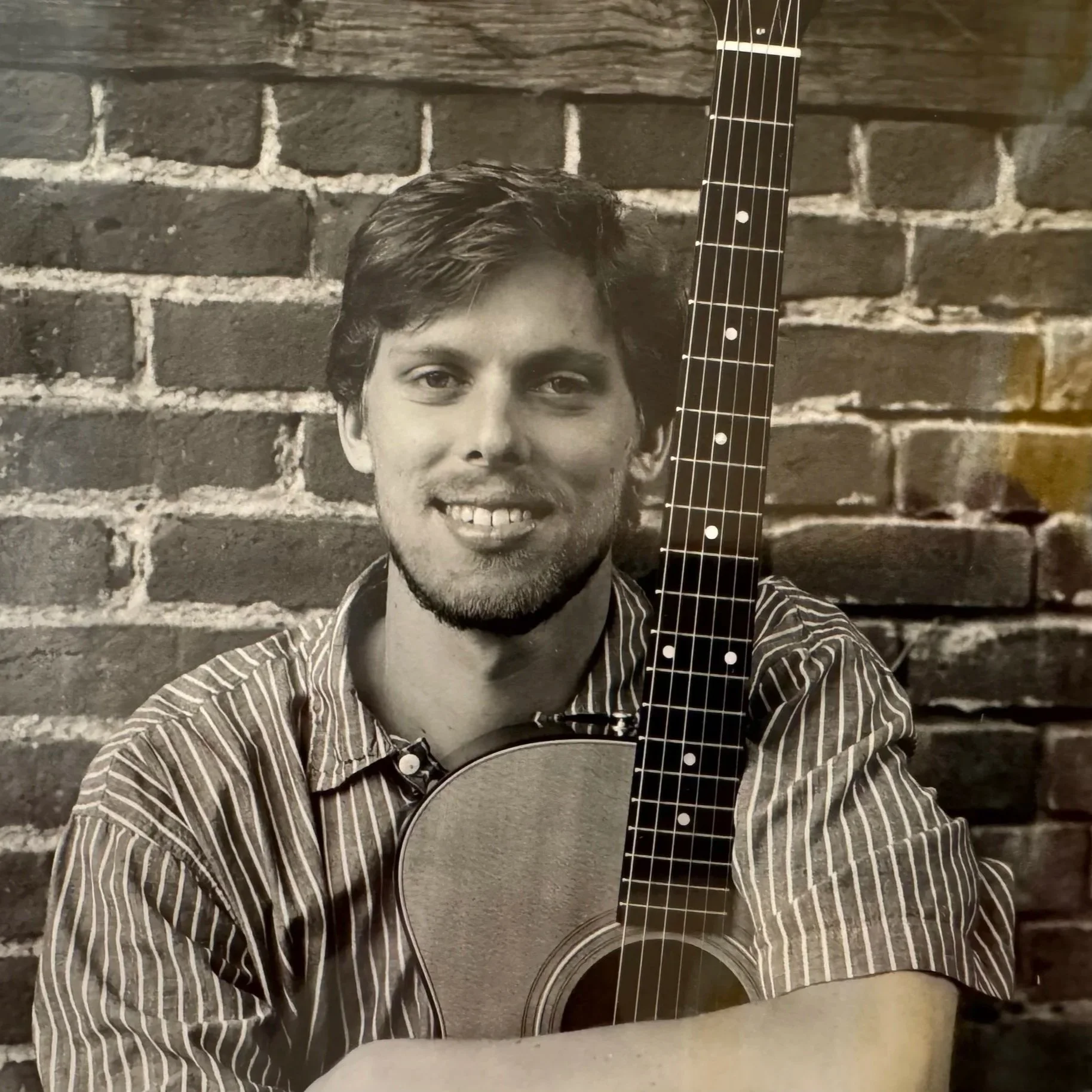
With my then-new Taylor guitar, early ’90s.
While in some careers there are ladders to climb and established paths to follow, for me these years have been full of bushwacks and surprises, with one thing leading to another: magazine editor and journalist to book author to NPR contributor to video creator to workshop leader to university teacher, all while continuing to write, perform, and record a wide array of music.
I’m still joined at the hip with Acoustic Guitar as a writer and editor, as the magazine rolls on, against all odds, in its 36th year.
I feel like I’m playing guitar, singing, and writing better than ever, and I’m having an absolute blast performing and collaborating with an array of great musicians.
I still have that freelancer’s feeling of not being entirely sure what’s next. The uncertainty is both daunting and thrilling, and it’s what I wanted from day one.
What I do know is that I am deeply grateful to be still doing this work, and to everyone who reads an article or post or book, comes to a show, listens to a song, takes a workshop or class, shares a song or story they’re working on. That connection, one to one, is the reason for it all.
Thank you for being here.
JPR